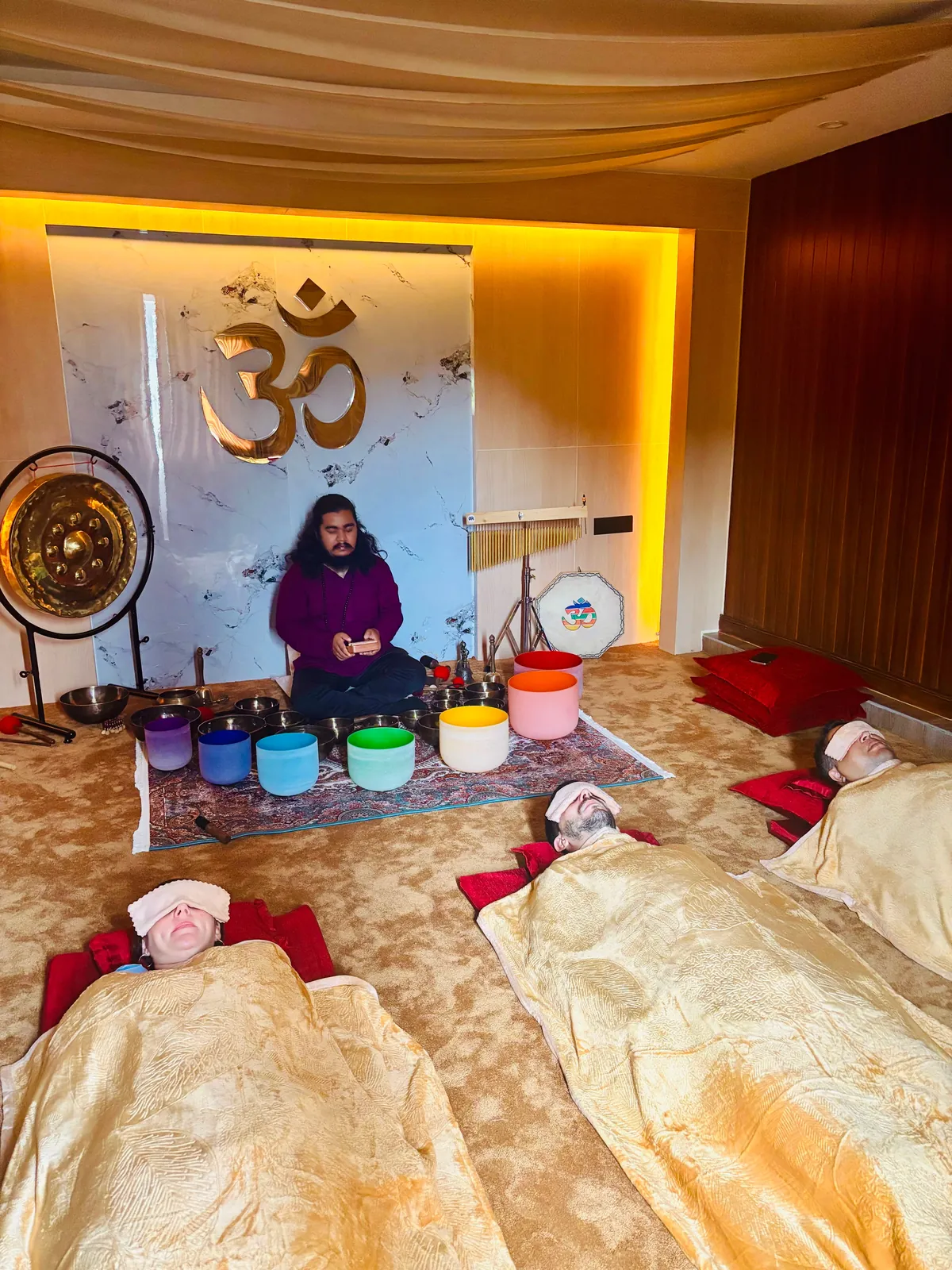
Visitors to Nepal meet singing bowls within hours of arriving, they hum from every other shop in Thamel. But there is a large difference between a souvenir and a therapeutic instrument, and an even larger one between hearing a bowl and receiving a session. This article explains what sound healing actually involves, in plain language.
What the bowls are
Traditional Himalayan singing bowls are hand-hammered from a bronze alloy. When struck or rimmed, a good bowl produces not one note but a stack of overtones that swell and beat against each other. “Full-moon” bowls, hammered during the full moon, according to tradition, are prized for the evenness of their voice.
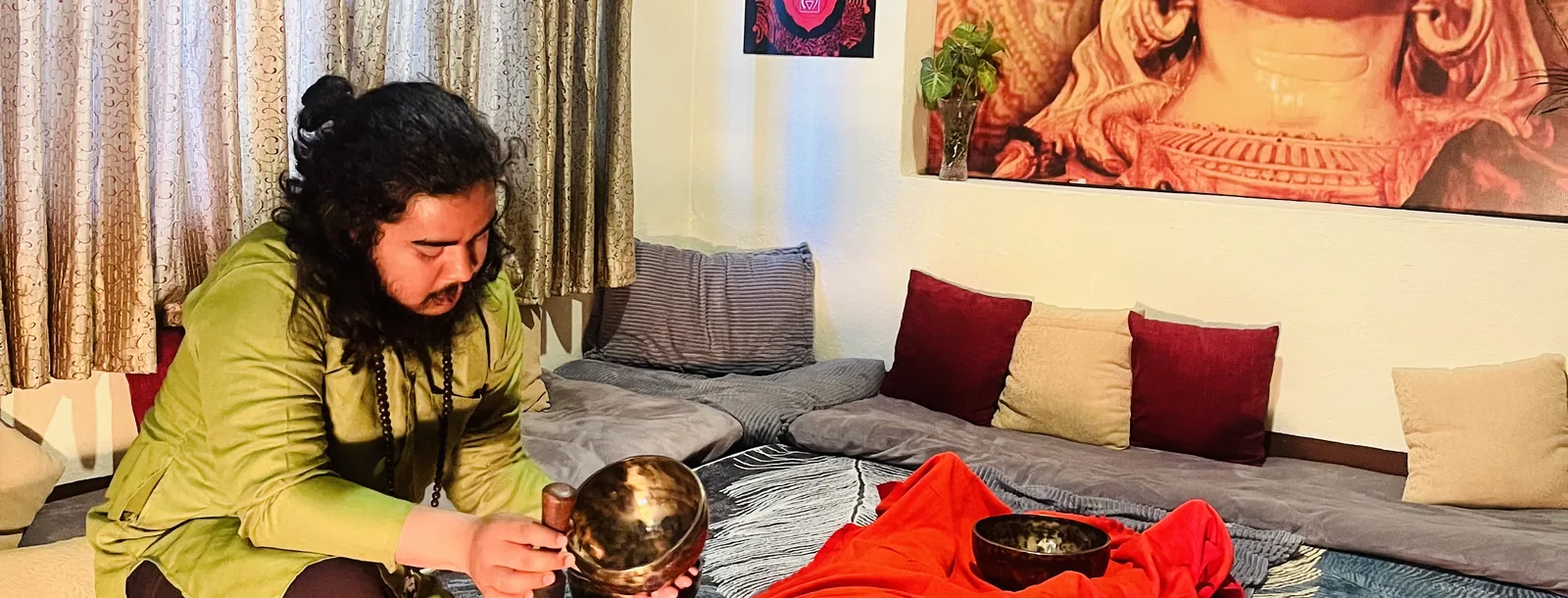
In a healing session the bowls are not only heard. They are placed on the body, on the back, the belly, along the spine, so that their vibration is felt directly in the tissue. This felt vibration, more than the sound itself, is what makes the experience so distinct.
How the sound actually works
A singing bowl is what an instrument catalogue would call a standing bell: a bell that sits rim-up rather than hanging. Strike it, or run a mallet around the rim, and it does not produce one clean note. It produces a fundamental tone plus a stack of higher partials, and because a hand-hammered bowl is never perfectly symmetrical, those partials sit slightly out of tune with each other. That is what creates the slow wobble you can hear in a good bowl, the sound seeming to breathe in and out. Play two bowls together and the effect multiplies.
A tone that keeps shifting slightly holds your attention, but it is too repetitive to think along with. There is no melody, lyric or structure to follow. Lying still under a blanket for an hour with that sound, most people's breathing slows.
What a session feels like
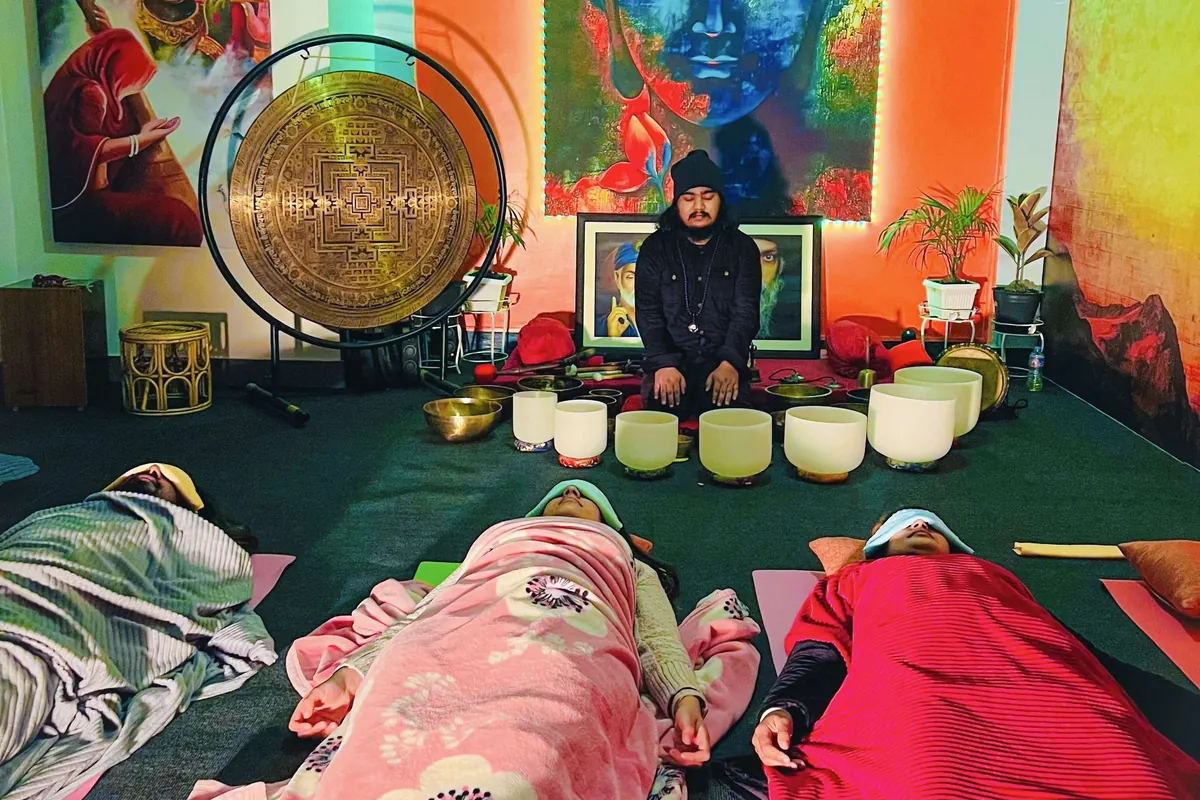
You lie fully clothed on a mat, wrapped in a shawl. The practitioner works through a sequence, typically grounding tones near the feet and pelvis first, moving up toward brighter bowls near the chest and head, and back down. Most people report warmth, heaviness, slowed thought, and a state between waking and sleep.
What it does, and what the research says
Slow, resonant, predictable sound is one of the more reliable ways to shift the nervous system from its alert state into its rest-and-digest state. Heart rate slows, breathing deepens, muscles release. There is research here, and it points the same way: studies of Tibetan singing bowl meditation report reduced tension, anxiety and low mood afterwards, and a 2025 systematic review of the clinical studies concluded that singing bowls may have potential to ease anxiety and depression and improve sleep quality.
The reviews find consistent short-term reductions in tension and negative mood, measured right after a session. The studies are small, often lack a proper control, and none has shown lasting change from one bowl session. Therapeutic effects of singing bowls: a systematic review of clinical studies.
We do not claim the bowls cure disease. What they give most people is deep rest, which can help with sleep and stress.
Who should take care
Sound healing is gentle and suits almost everyone, but tell your practitioner beforehand if any of the following apply, so the volume can be lowered and the bowls kept off the body:
- Pregnancy, particularly the first trimester
- Epilepsy or a seizure disorder
- A pacemaker or another implanted device
- Recent surgery, fractures, or acute injury
- Tinnitus, hyperacusis, or other ear and hearing conditions
- Any condition you are currently under medical care for
None of these automatically stop you from coming. Tell us first. A sound session does not replace medical care.
Session or training?
If you want to receive the experience, book a sound healing session, 60 minutes, individual or group. If you want to work with the bowls yourself, for your family, your yoga classes, or a professional practice, our singing bowl training covers technique, chakra protocols and session design, with a set of bowls to practice with throughout the course.
One more thing worth reading if you are choosing where to do this: why sound healing in Nepal is different from booking a sound bath at home.