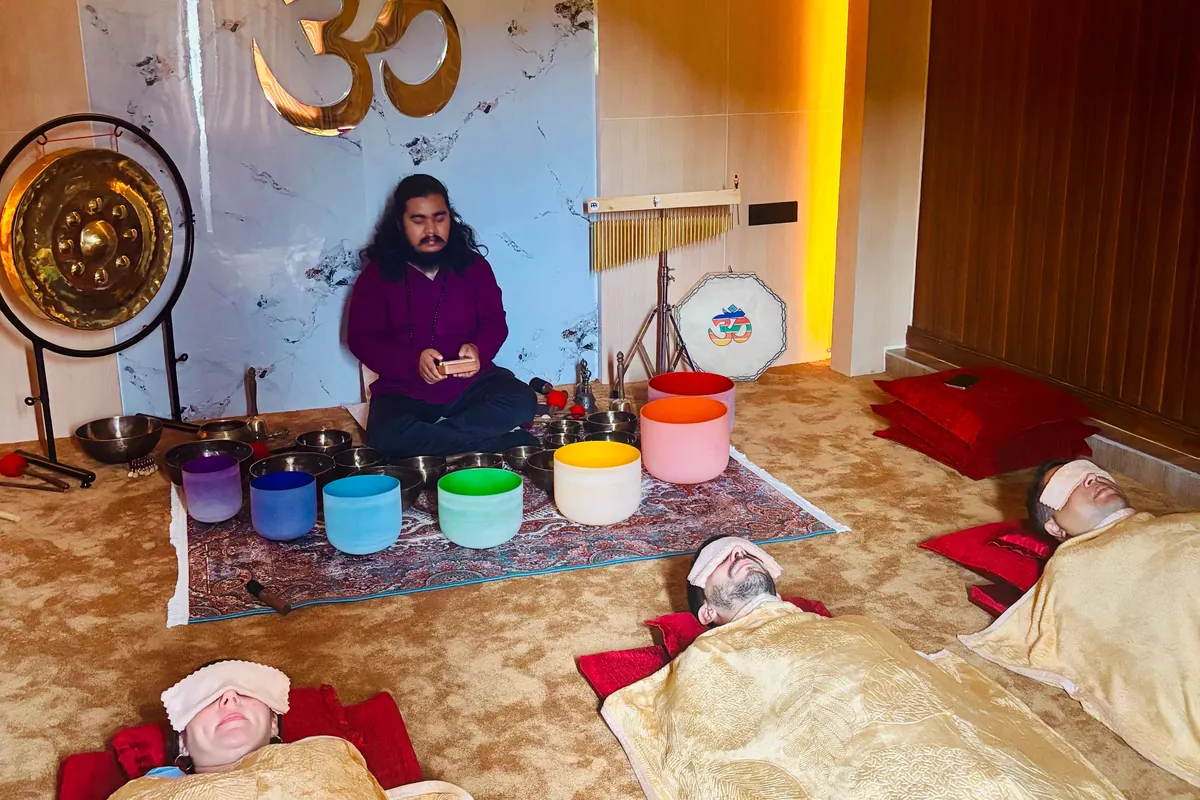
Ten years ago, finding a sound bath outside Asia took effort. Now most cities have several, and the bowls turn up in yoga studios, spas and wellness weekends everywhere. That is a good thing. It also raises a fair question for anyone reading this from abroad: if you can lie under singing bowls twenty minutes from your house, what is the point of receiving it here?
Some of what Nepal adds is hard to replicate, and some of what is said about it is marketing. This post separates the two.
The bowls are made here
This is the least mystical and most concrete difference. Himalayan bowls are still hand-hammered in workshops around the Kathmandu valley and across the border in Tibet, by families who have done it for generations. A hand-hammered bowl has an uneven wall thickness, and that unevenness is exactly what gives it the long, wobbling, many-layered voice that a machine-spun bowl cannot produce.
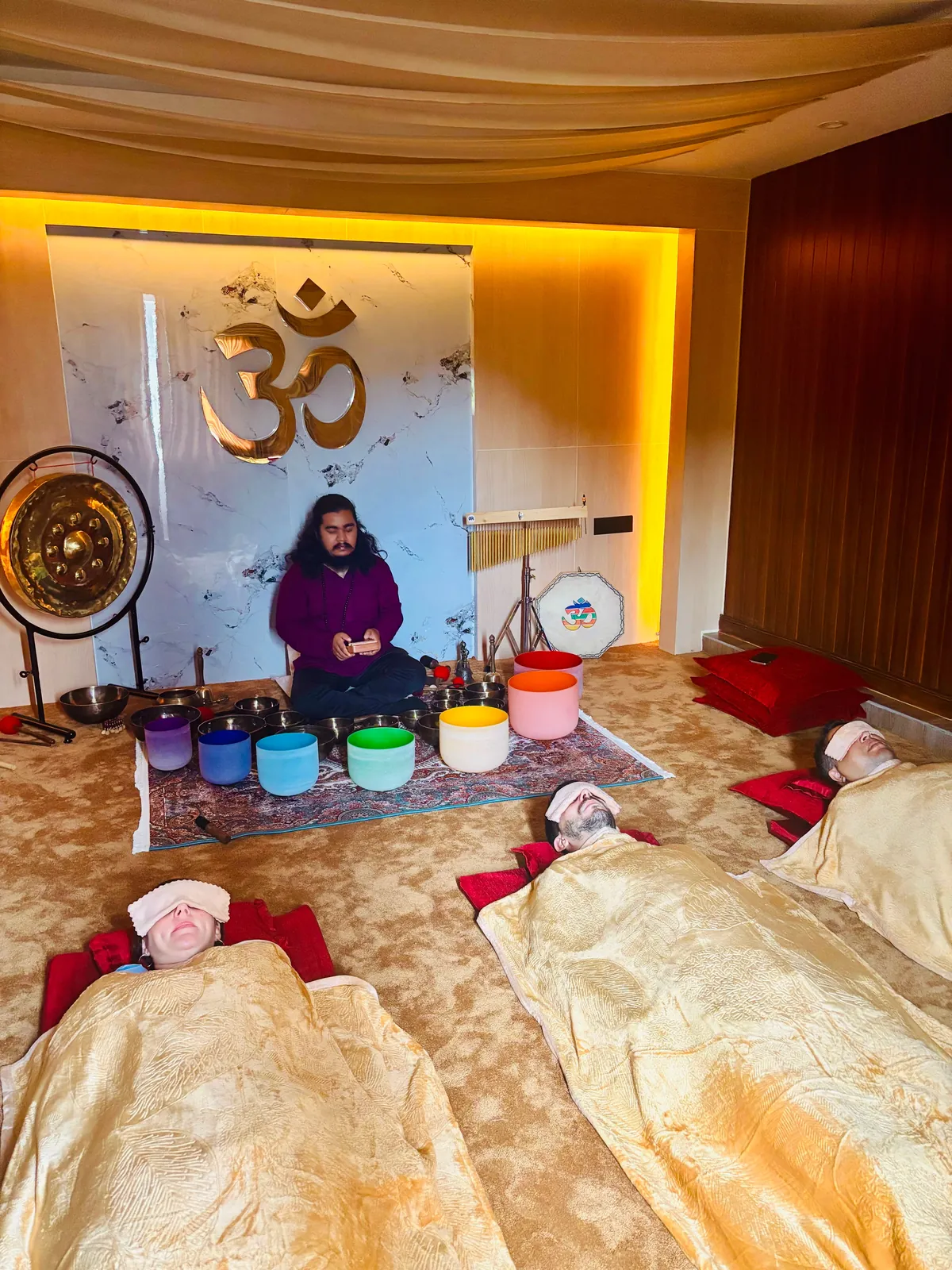
Most studios abroad work with a handful of bowls, chosen on a budget and shipped a long way. A centre here can keep a large working set, replace what cracks, and pick instruments by ear. A full set played well sounds noticeably richer.
The tradition is local
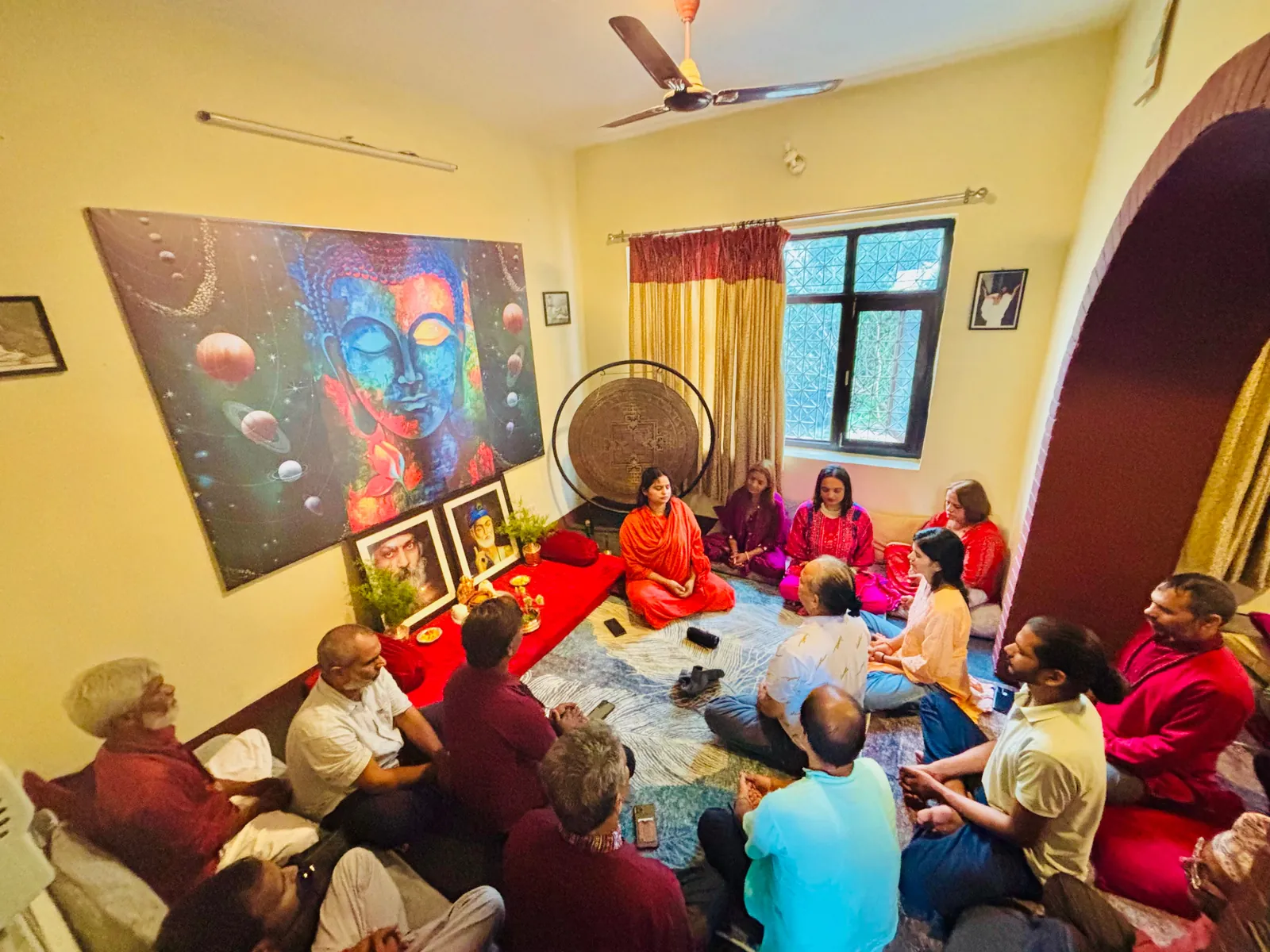
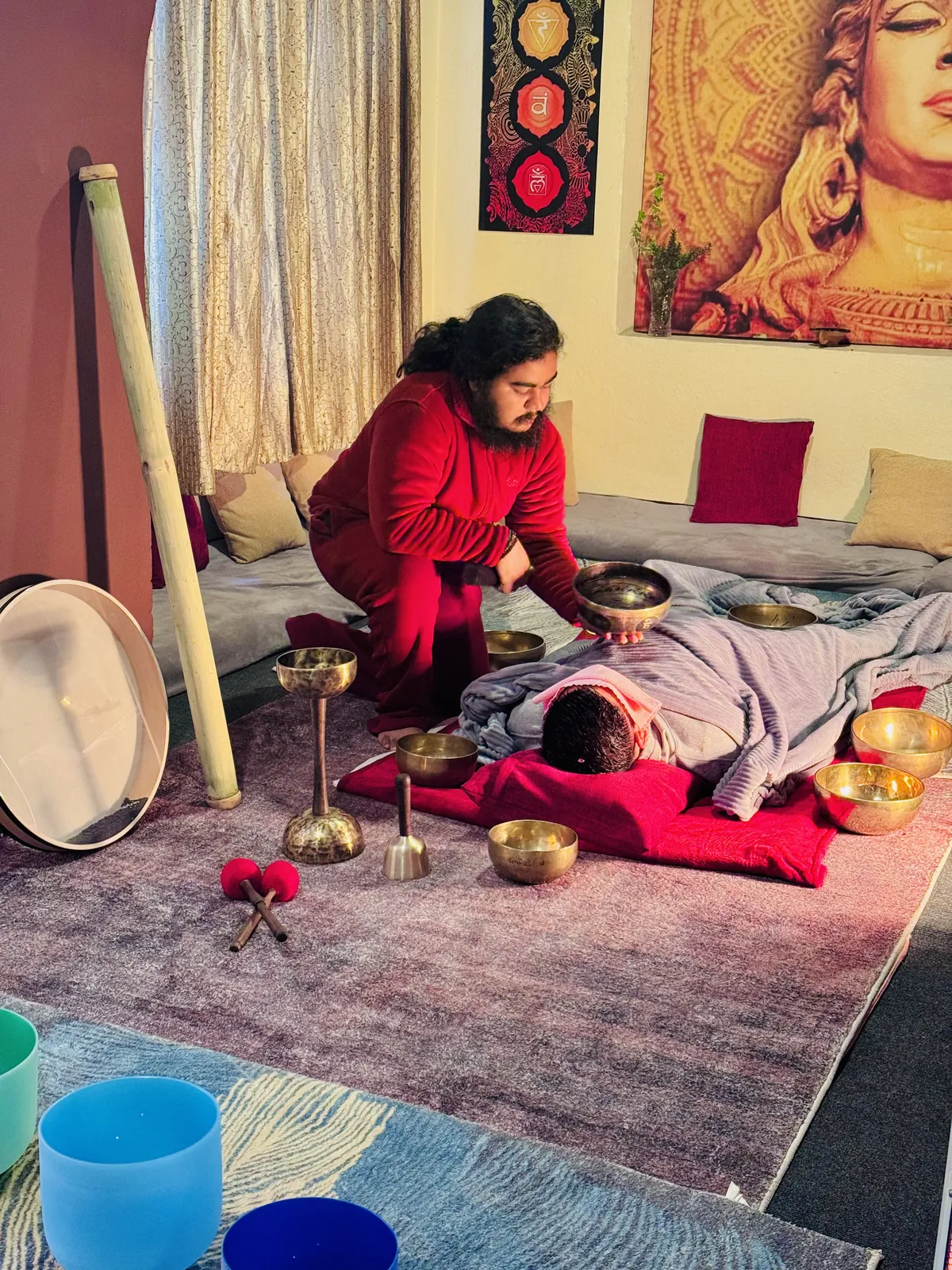
In many countries, sound healing arrived as a wellness import, often learned on a short course and added to a yoga or massage practice. In Nepal it is part of a living Buddhist and Hindu culture of sound, mantra, bell and gong.
It shows in small things: knowing when to stop, how long a silence should run before the next tone, and when to use the gong.
You are already away from your routine
At home, a sound bath is something you fit in after work. Here, you are already away from work and your usual routine, and you are probably walking more and sleeping differently. That makes it easier to relax in a session.
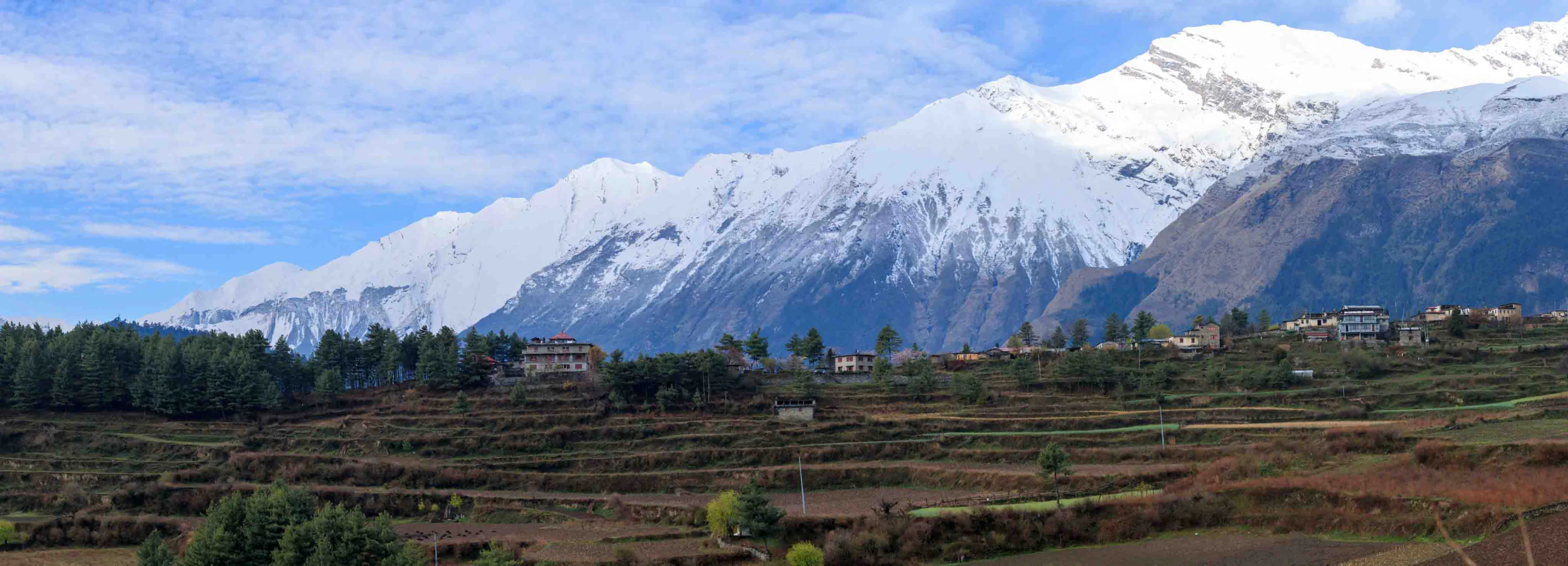
Our centre is in Tarkeshwor, on the north-western edge of the valley by the Nagarjun forest, away from the traffic of Thamel.
It costs less than at home
Sessions in Kathmandu are priced for the Nepali economy. You can do several across a week, or combine a session with meditation and a short training, for what one or two sessions would cost at home. If you want to try it more than once, this is a sensible place to do it.
What Nepal is not
Being in Nepal does not guarantee quality. Kathmandu has excellent practitioners, and it also has shops that give a fifteen-minute session between bowl sales. Ask who is playing, how long they have practised, and how long the session runs.
Sound healing is not medical treatment, in Nepal or anywhere else. Research points to short-term relief from tension and low mood, and no cure. For the detail, we wrote about it in what singing bowl sound healing actually does.
And it is not remote or difficult. You do not need to trek anywhere. The centre is a short drive from the airport, and most guests come between other plans.
So is it worth coming for?
Flying to Nepal only for a sound session is probably not worth it. If you are already here, a session on good instruments with an experienced teacher is worth fitting in.