To choose singing bowl training in Nepal, compare courses on what you can check before you pay: the total teaching hours, a day-by-day curriculum for each level, the class size, who teaches, what the certificate is and who issues it, what the fee includes, the price per teaching hour, whether you practise on real people, the deposit and refund terms, and where the school is. Reviews from people who took the course tell you more than reviews of a single session.
We teach singing bowl training in Kathmandu, so under each point we also give our own course's answer, to make comparison easier.
How many teaching hours should a singing bowl course have?
No outside body sets a standard length for a singing bowl course, and schools in Nepal usually describe their courses in days. A day can mean a two-hour class or a full timetable. Ask each school for the total number of teaching hours, how many of those you spend playing the bowls yourself, and whether lunch, breaks or sessions you receive as a client are counted.
When you have the hours, divide the fee by them. The price per teaching hour is the fairest way to compare a short, cheap course with a longer, dearer one. It also shows when a low price buys very little time with the teacher.
What should the curriculum cover, day by day?
Ask for a written outline that lists what you learn each day, for each level. A list of broad topics such as healing techniques or energy work makes it hard to know what you are paying for. For a foundation course, look for:
- how to hold, strike and rim a bowl, and how to stop it
- listening practice, so you can hear the main tone and the overtones of different bowls
- where bowls can be placed on the body, and when they should not be: pregnancy, pacemakers and other implants, recent surgery, hearing conditions
- how to plan and run a full session from arrival to the end
- practice on other people while the teacher watches
For an advanced level, ask what it adds to the foundation course, and ask for its outline too.
Our 3-day basic course gives one day each to foundations, healing applications and professional practice, and the outline is on the course page. The 7-day advanced course goes further into chakra balancing protocols, full-body sound massage and designing complete healing sessions for clients. You take the basic course with us first.
How big is the class, and how many bowls will you have?
In a smaller group you get more of the teacher's attention and more time on the bowls. Ask for the maximum class size, how many bowls you will practise on, and whether you share them. If you want one-to-one teaching, ask whether it is offered and what it costs.
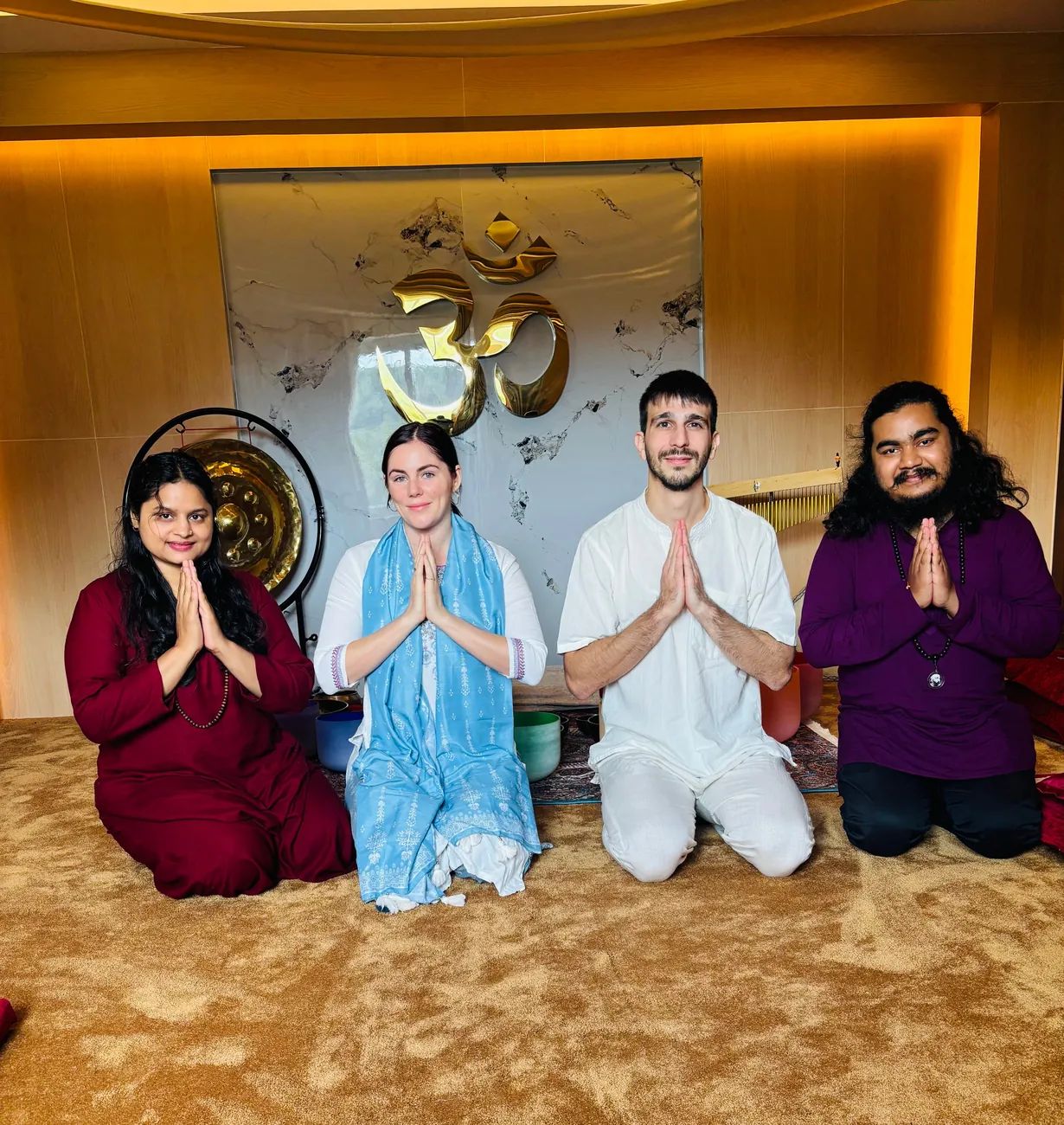
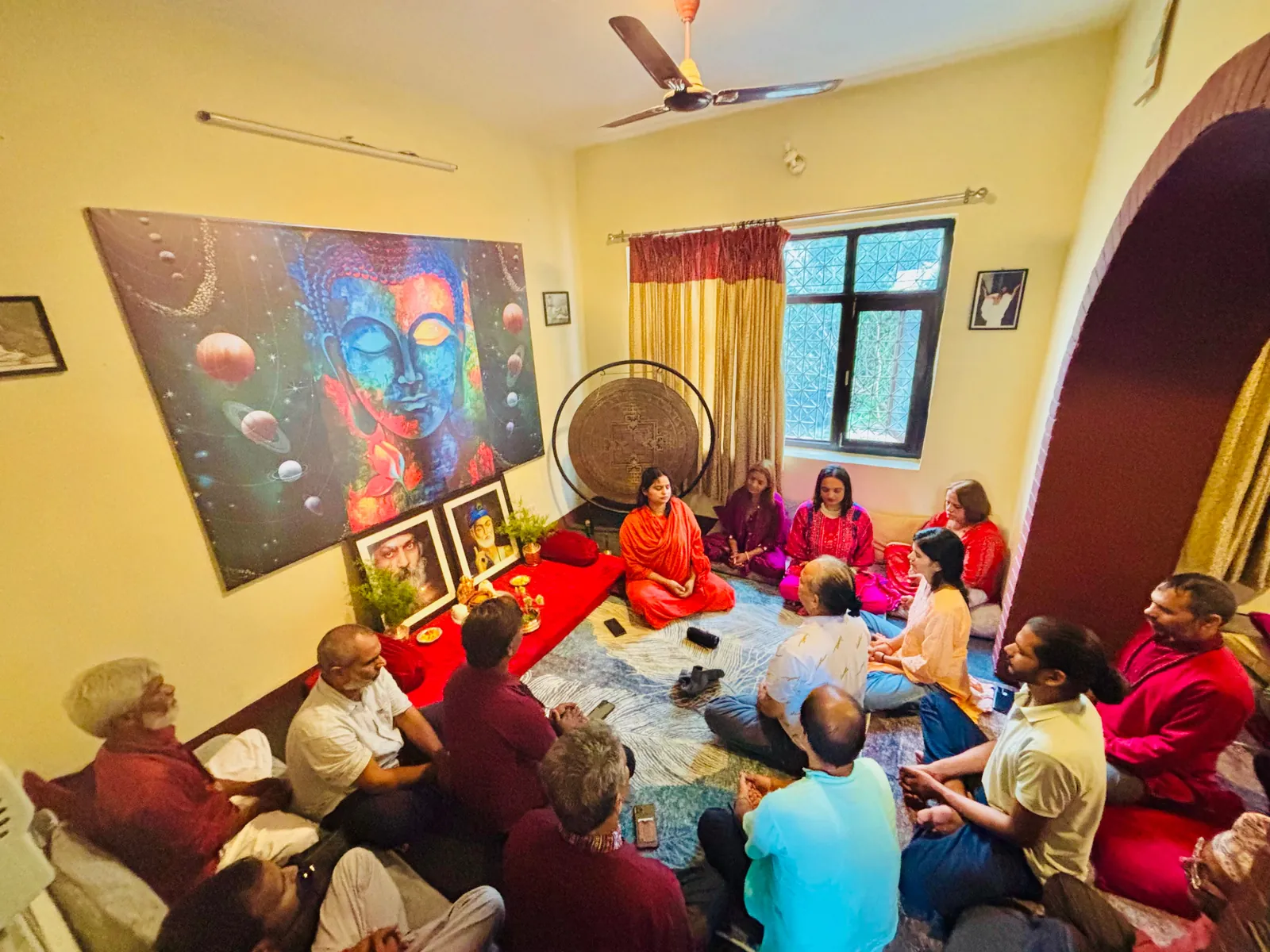
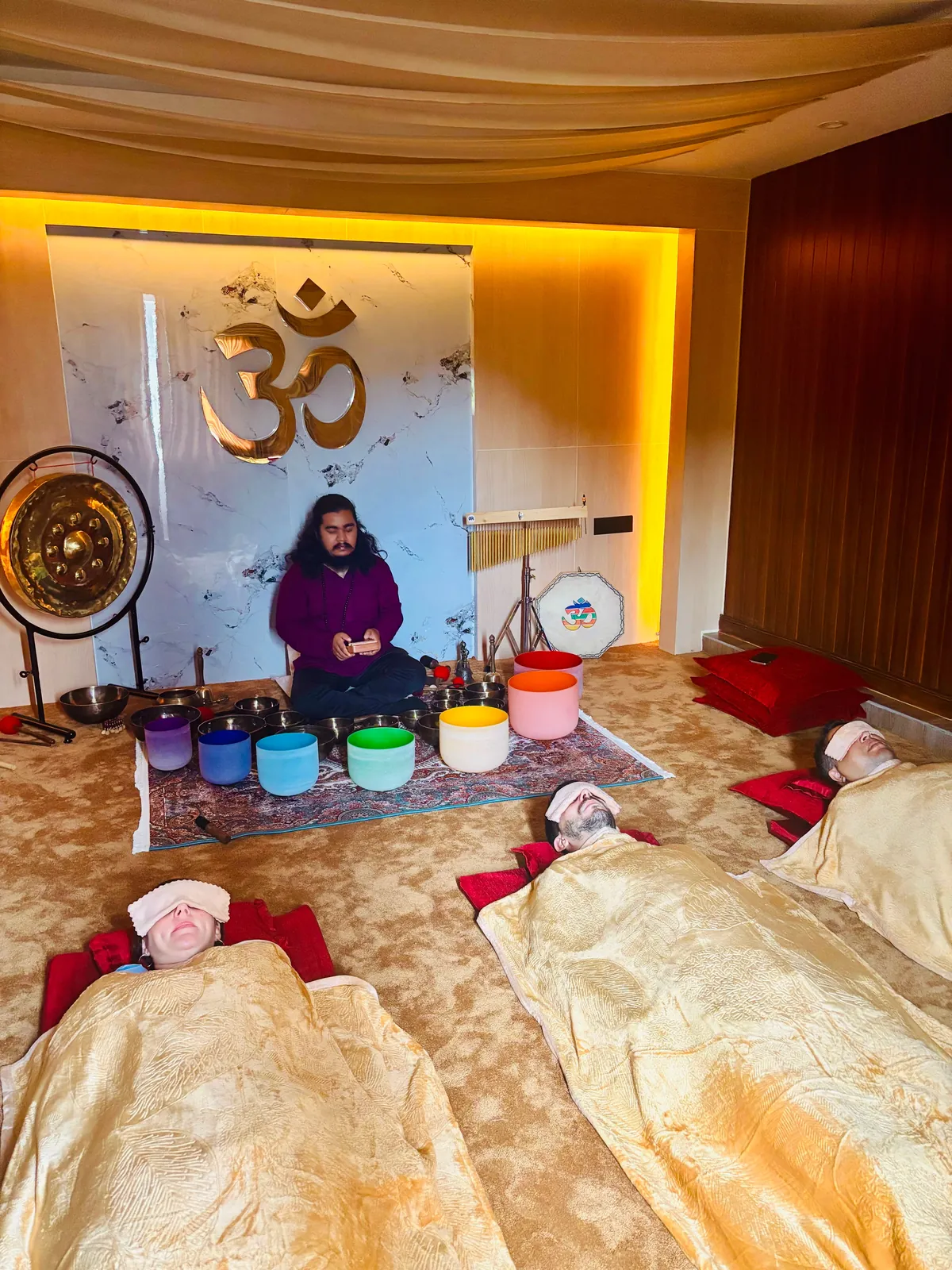
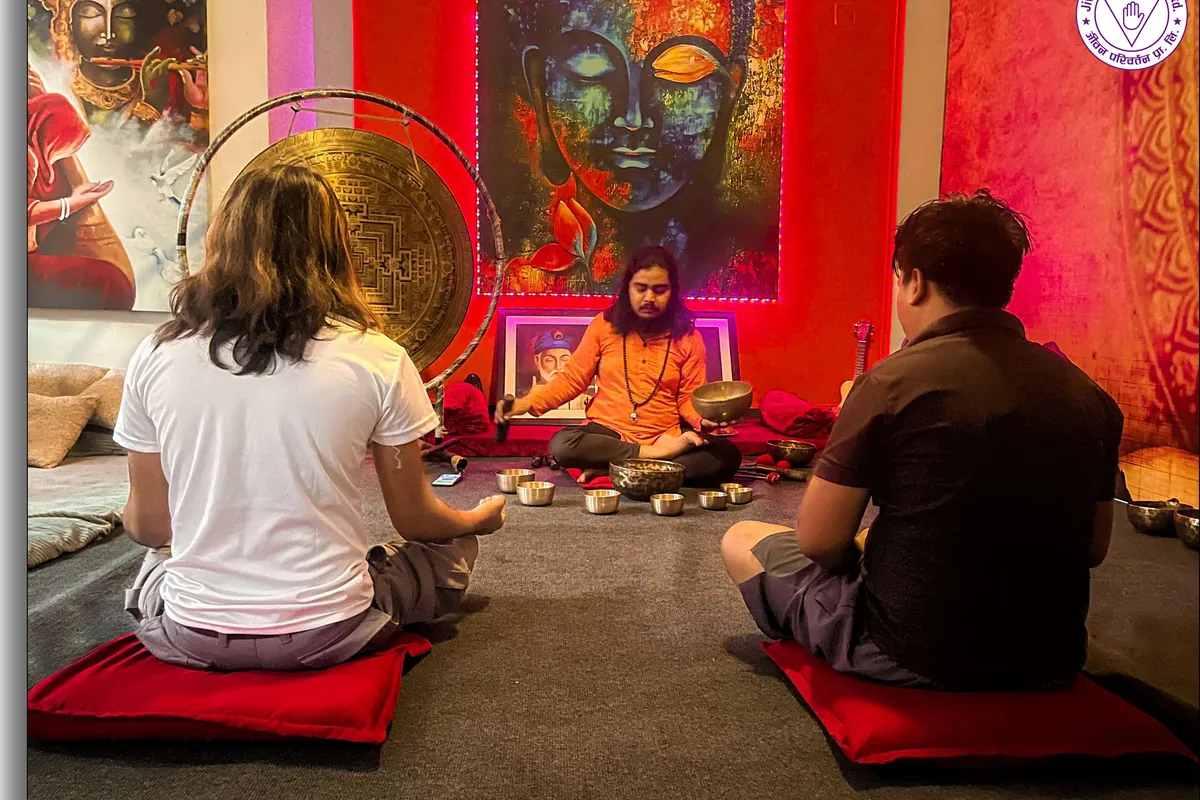
Our groups take up to 16 students. You practise on a set of seven bowls that belong to the centre and stay there when the course ends.
Who teaches, and can you see them work first?
Ask who teaches the whole course, by name, and whether that person also gives sessions to clients. A teacher who works with clients every week can show you what a course outline leaves out, such as how to pace a session or what to do when a client wants to stop.
If your dates allow, book a session with the teacher before you commit to a course. Our course is taught by Swami Anish Ji, our sound healing therapist, and you can book a sound healing session in Kathmandu with the same team first.
Is the certificate accredited, and does it matter?
Schools in Nepal describe their certificates in several ways. Some say the course is accredited by IPHM, some that it is a Yoga Alliance YACEP course, some that it is linked to CTEVT, and many issue their own certificate. These are the facts behind each one:
- IPHM (International Practitioners of Holistic Medicine) describes itself as an independent accreditation body that grew from a UK-based organisation. It accredits courses that meet its standards, and their graduates can apply to join. It is not a government regulator, and it states that its accreditation does not include insurance.
- YACEP stands for Yoga Alliance Continuing Education Provider, a status Yoga Alliance gives to experienced registered yoga teachers who run continuing education. It matters if you are a registered yoga teacher who needs continuing education hours. It is a yoga credential and does not cover sound therapy as a profession.
- CTEVT, the Council for Technical Education and Vocational Training, is a national body under Nepal's Ministry of Education, Science and Technology. It prepares curricula, affiliates training institutes and runs skill tests through the National Skill Testing Board. If a school mentions CTEVT, ask which CTEVT curriculum or skill test the course follows and ask to see the document.
- An in-house certificate is issued by the school and records that you completed its course. What it is worth depends on the school's reputation and on what the course covered.
None of these is a licence to practise sound healing in another country. What you can do at home depends on local rules, which we cover in our guide to a sound healing career after training.
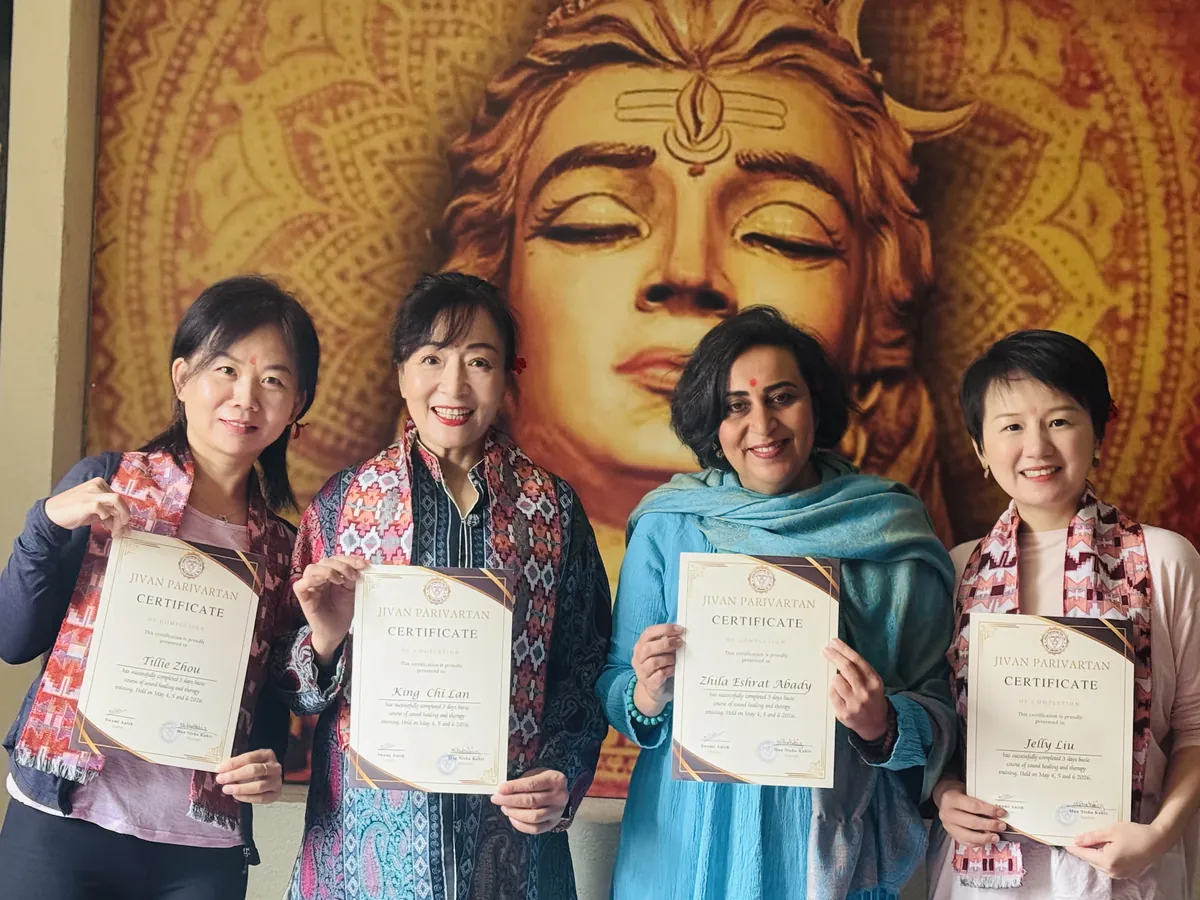
Our course gives a Jivan Parivartan certificate, issued by the centre.
What does the course fee include?
Ask each school whether the price includes:
- accommodation, and whether the course is residential
- meals, and which ones
- airport pickup
- a course manual or other materials
- bowls: whether you practise on the school's bowls or take a set home
If a set of bowls is included, ask what they are made of and whether they were hammered by hand or made by machine, because both affect how a bowl sounds. Our guide to singing bowl types explains the difference.
Our fee covers all training sessions, a course manual and practice materials, supervised practice, the certificate, herbal tea, and a vegetarian lunch on every training day. The course is non-residential, so you arrange your own stay, and airport pickup can be arranged on request. The practice bowls stay at the centre.
Will you practise on real people?
Playing a bowl for yourself and running a session for another person are different skills. Ask whether the course includes practice on other people, whether the teacher supervises it, and whether you get feedback afterwards. Practice on fellow students is useful. Practice on clients who came for a session is closer to the work you may do later.
Supervised practice on real sessions is part of our course, and the third day of the basic course includes supervised client practice.
Fixed start dates or flexible dates?
Some courses run on fixed dates with a set group, and others start when you arrive. Fixed dates suit you if you want to train alongside other students. Flexible dates suit you if the course has to fit around a longer trip.
Our course runs on flexible dates throughout the year and usually starts within a few days of your request.
What are the deposit and refund terms?
Read the cancellation terms before you pay. Check the size of the deposit, whether it is refundable, how much comes back if you cancel early or late, whether you can move to a later date instead, and who pays the bank charges on a refund.
Ours: a 20% deposit secures your place and is not refundable. Cancel 15 days or more before the start date and 80% of the full fee is refunded. Cancel later than that and the deposit is kept, but any balance you have paid is refunded. Once the course has started, fees are not refunded. Instead of a refund you can move your deposit once to a later date within 12 months, free of charge. The full terms are in our refund policy.
Thamel, the edge of the valley, or Pokhara?
Thamel is Kathmandu's main tourist district. Courses there are easy to reach if you stay in the area, and the streets around them are busy. Schools on the edges of the Kathmandu valley are quieter and greener, and you will usually need a taxi to reach them. Pokhara, a lake city about 200 km west of Kathmandu, is quieter again, and adds a domestic flight or a long road journey to your trip.
Our centre is in Tarkeshwor-5, on the north-western edge of Kathmandu below the Nagarjun forest, about 30 minutes from Thamel by taxi. You can stay in Thamel and come out each day, or stay nearer the centre.
Whose reviews should you read?
Look for reviews from people who took the course, and read what they say about the teaching, the time spent playing and the certificate. Reviews of a single session tell you about the room and the person playing, which is useful but answers a different question.
Questions to send every school
- How many teaching hours does the course have in total, and how many are hands-on?
- Can I see the day-by-day outline for each level?
- What is the maximum class size, and how many bowls will I practise on?
- Who teaches the whole course?
- What certificate do I receive, and who issues it?
- Does the fee include accommodation, meals, airport pickup and bowls?
- Will I practise on real clients with the teacher watching?
- Is the start date fixed or flexible?
- How much is the deposit, and what are the refund terms?
Singing bowl training teaches a relaxation practice and is not a medical qualification. A sound session does not replace medical care.
Frequently asked questions
How much does singing bowl training in Nepal cost?
Prices depend on the school, the length of the course and what the fee includes, so compare them per teaching hour. Our 3-day basic course is USD 450 and our 7-day advanced course is USD 800.
Do I need any musical experience?
No. You do not need any musical skill, and most of our students learn the basic technique on the first day.
Can I go straight to an advanced course?
At our centre, no: you complete the 3-day basic course with us before the 7-day advanced course. Other schools set their own rules, so ask.