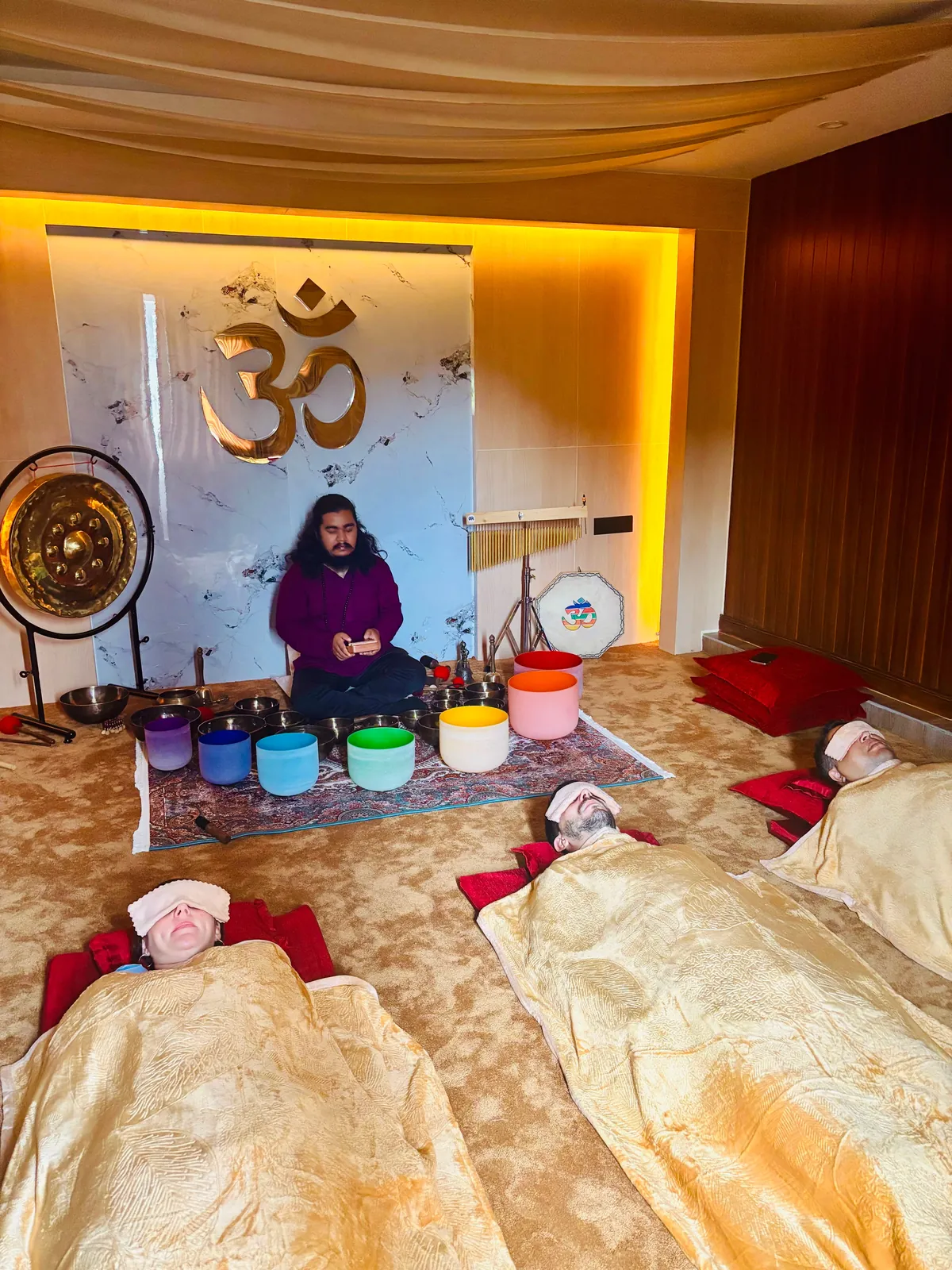

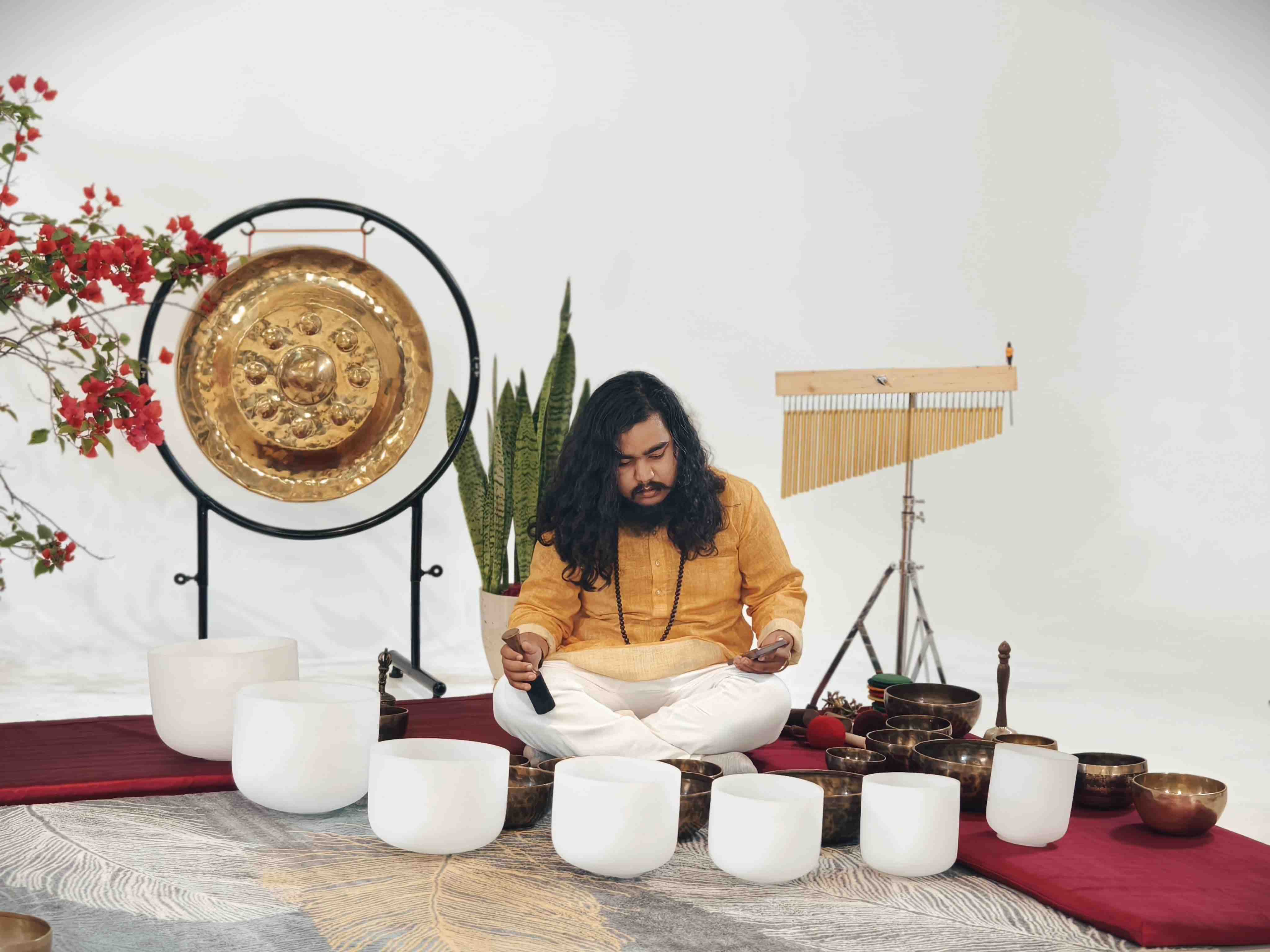
Singing bowls come in two main materials, metal and crystal. Most metal bowls are bronze, either hammered by hand or cast and shaped by machine, and some cheaper bowls are brass. Crystal bowls are made of fused quartz. Sellers also sort metal bowls by shape, with names such as Thadobati, Jambati and Ultabati, and describe some as seven-metal or antique. This guide explains each type, how they differ in sound, and which of the common claims hold up.
What are metal singing bowls made of?
Most metal singing bowls are bell metal, a bronze of roughly four parts copper to one part tin: about 78% copper and 22% tin by weight. The high tin content makes the metal harder and more resonant, which is why the same alloy is used for bells. It also makes it brittle, so a bronze bowl can crack if it is dropped on stone.
Some cheaper bowls are made of brass, an alloy of copper and zinc. Dealers who test bowls describe brass as giving a brighter tone that fades sooner than bronze.
Hand-hammered or machine-made: what is the difference?
The traditional method is to cast the metal and then hammer the bowl into shape by hand. Modern bowls may also be shaped on a lathe. Hand-hammered bowls show hammer marks inside and out, and their walls vary slightly in thickness. Machine-made bowls are smoother and more even.
The way a bowl is made affects its sound. Struck or rimmed, a bowl gives a low main tone with higher overtones above it, and you hear a slow pulse, called beating, where two vibrations sit very close in pitch. Studies of rimmed bowls found some beating even in a perfectly symmetrical bowl, because the vibration travels round the rim with the mallet. The uneven walls of a hand-hammered bowl add more of it, and players and dealers generally prefer hand-hammered bowls for their more layered sound.
To check a bowl, look for hammer marks, strike it gently and listen to how long the note lasts, then run a mallet round the rim to see how easily it starts to sing.
What are crystal singing bowls?
Crystal singing bowls are made of fused quartz, which is silica. Frosted bowls are made by fusing quartz sand at a very high temperature in a spinning mould. Clear bowls are shaped from quartz tubing, and are thinner and lighter. Crystal bowls are sold by the note they play, such as C or F, and they break easily, so a set needs padded cases for travel.
Players describe their sound as a clear, steady tone with fewer audible overtones than a bronze bowl.
Many sellers match the seven notes from C to B to the seven chakras, with C for the root and B for the crown. The pairing is a modern convention. No measurement links a musical note to a chakra.
We use both at our centre: hand-hammered bowls made in Nepal, and a set of frosted crystal bowls, alongside a gong.
What do Thadobati, Jambati and the other names mean?
Dealers in Kathmandu and abroad name metal bowls by their shape. The names are trade terms. Dealers do not all use them in the same way, and they disagree about where several of the shapes first came from. The common ones:
- Thadobati: fairly straight, high walls and a flat bottom
- Jambati: large and heavy, with a curved wall and a small base; known for low notes
- Ultabati: close to a Jambati, with the top of the wall curving inward
- Manipuri: shallow, with a low wall and a rounded bottom
- Mani: heavy and thick-walled, with a wide lip turned inward
- Naga, chalice or pedestal bowls: a bowl fixed on a stem or ring base, so it can be held at any angle
- Lingam: a raised point in the middle of the inside floor
- Remuna: close to a Thadobati, with walls angled slightly inward
A shape name describes the outline of a bowl. It does not tell you the bowl's age, its alloy or whether it was hammered by hand.
Are singing bowls really made of seven metals?
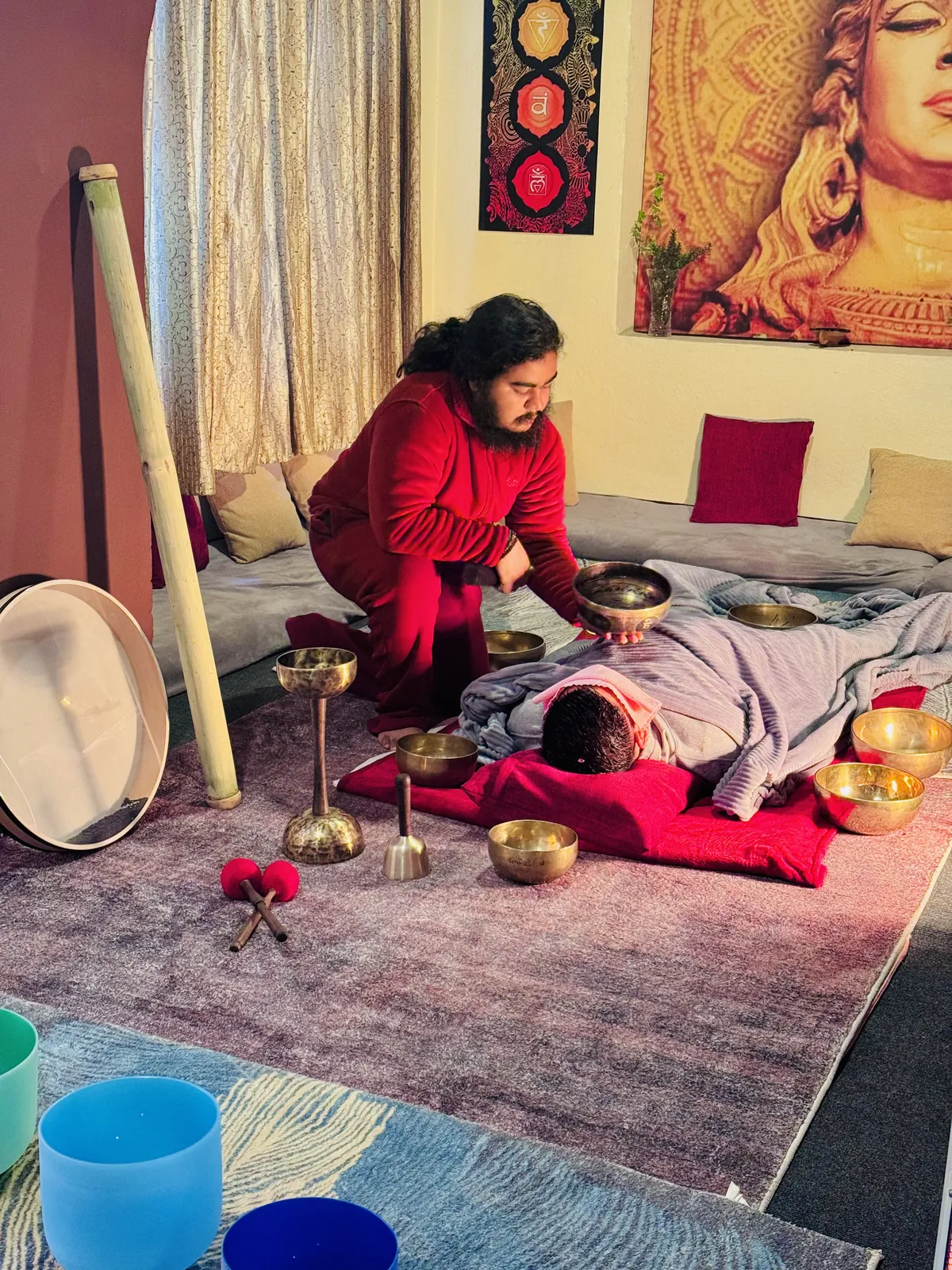
Sellers often say a bowl contains seven metals, each linked to a heavenly body: gold, silver, mercury, copper, iron, tin and lead. Testing does not support this. A 1996 analysis of two bowls at Concordia University found them to be essentially bell metal, with small amounts of lead, zinc, iron and silver at levels consistent with impurities, and no gold or mercury (summarised in Wikipedia on standing bells). Dealers who have tested their own stock report the same copper and tin.
Treat seven-metal and planetary labels as a story told about the bowl. How it sounds depends on the ratio of copper to tin, the thickness, the shape and the hammering.
Are antique singing bowls better?
Antique has no fixed meaning when a bowl is sold. Dealers describe some old bowls as having been used for food or grain, and they often disagree about a bowl's age. Without documents, age is hard to prove.
Struck standing bells have a long history in Buddhist ritual across Asia. Bowls played by rimming are harder to trace: historical accounts of Tibetan music do not mention them, and they began to be imported to the West in the early 1970s. According to an article in Tricycle on their history, they first appear in the written record in 1972, on the American album Tibetan Bells.
An old bowl can sound very good, and so can a new one. Choose by listening, and ask about returns if you buy from abroad.
Which singing bowl should a beginner use?
To learn technique, start with a medium-sized bronze bowl that you can hold on one flat hand. Try rimming it before you buy: some bowls start singing easily, and others take practice. Bronze bowls are also sturdier than crystal ones.
You do not need to buy bowls before a course. On our singing bowl training in Kathmandu you practise on a set of seven bowls at the centre, which stay there when the course ends, and you find out which sizes and tones suit you before you spend money.
If you are comparing courses, our guide on how to choose singing bowl training in Nepal lists what to ask, and our guide to a sound healing career after training covers the equipment you need to start working.
Frequently asked questions
Which is better, crystal or metal singing bowls?
It depends on the use. Bronze bowls give a layered, changing sound and can be placed on the body during a session. Crystal bowls give a clear, steady tone. We use both at our centre.
What is the difference between a singing bowl and a gong?
A singing bowl is a kind of bell: it vibrates most around its open rim. A gong vibrates most towards its centre, and gives a broader, fuller sound.
Are Tibetan singing bowls made in Tibet?
Most bowls sold as Tibetan or Himalayan today are made in Nepal and northern India. The name describes a style of bowl.
Do singing bowls have healing properties?
Research on singing bowls is limited. Small studies report less tension and better mood straight after a session, and none shows that a bowl treats illness. Sound sessions are for relaxation and do not replace medical care. We cover the research in what singing bowl sound healing actually does.